
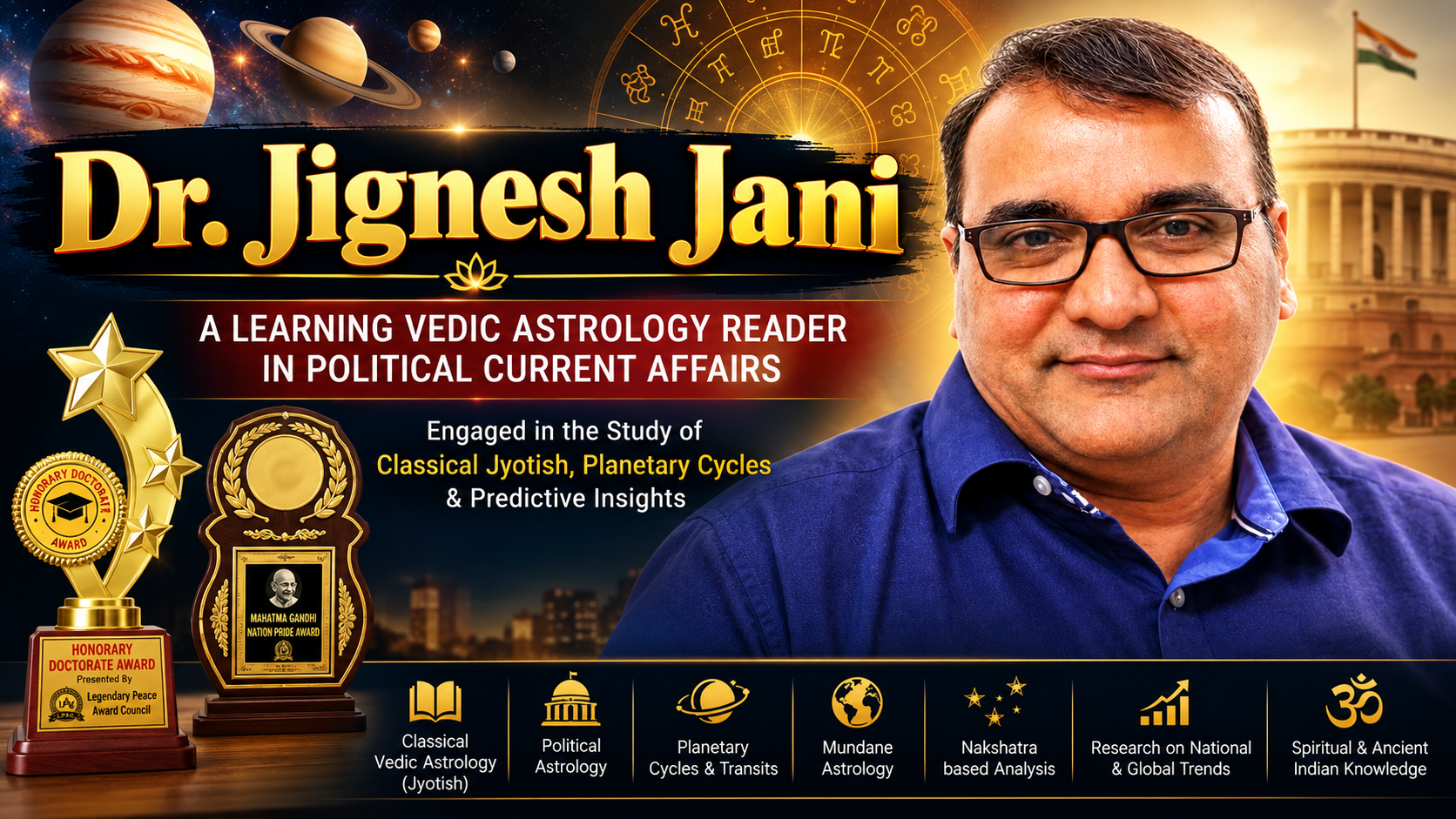
How Vedic Astrology Symbolically Interprets Global Political Developments: Jignesh Jani
Ahmedabad | July 10, 2026: Vedic astrology researcher Jignesh Jani has shared his perspective on how traditional Jyotish symbolically interprets contemporary political developments around the world. According to Jani, Vedic astrology provides a cultural and philosophical framework for understanding collective cycles and societal changes, while it should not be regarded as a scientifically established method for predicting geopolitical events or political outcomes.
Jani explained that planetary movements have been studied for centuries in Vedic astrology as symbolic indicators of broader trends affecting societies, institutions, and nations. He noted that many astrologers interpret the present Mars–Rahu conjunction, traditionally known as Angarak Yoga, as representing heightened strategic activity, assertive leadership, and periods of increased geopolitical attention. These interpretations, he said, are intended to encourage reflection rather than provide certainty about future events.
He also discussed the Saturn–Neptune alignment, which many astrological traditions associate with institutional transformation, ideological shifts, policy changes, and evolving international alliances. According to Jani, these symbolic themes reflect periods during which governments and societies adapt to changing political and economic realities.
Highlighting Jupiter’s traditional significance, Jani said the planet represents wisdom, ethics, justice, diplomacy, and higher learning in Vedic astrology. Many practitioners believe Jupiter symbolizes opportunities for peaceful negotiations, balanced leadership, and constructive international engagement, particularly during challenging periods.
While discussing global affairs, Jani emphasized that real-world political developments are shaped by diplomacy, economic policies, public institutions, security considerations, and the decisions of elected leaders. Astrology, he noted, should complement thoughtful discussion rather than replace factual analysis or evidence-based policymaking.
“Traditional astrology offers symbolic insights into collective human experiences, but the future is determined by the choices people make,” Jani said. “Peace, stability, and prosperity depend on responsible leadership, international cooperation, and dialogue among nations.”
Jani concluded by encouraging readers to understand Vedic astrology within its traditional context while distinguishing it from scientific analysis. He expressed hope that governments, international organizations, and communities around the world will continue working together to resolve differences peacefully, strengthen diplomatic ties, and promote sustainable global development for future generations.